
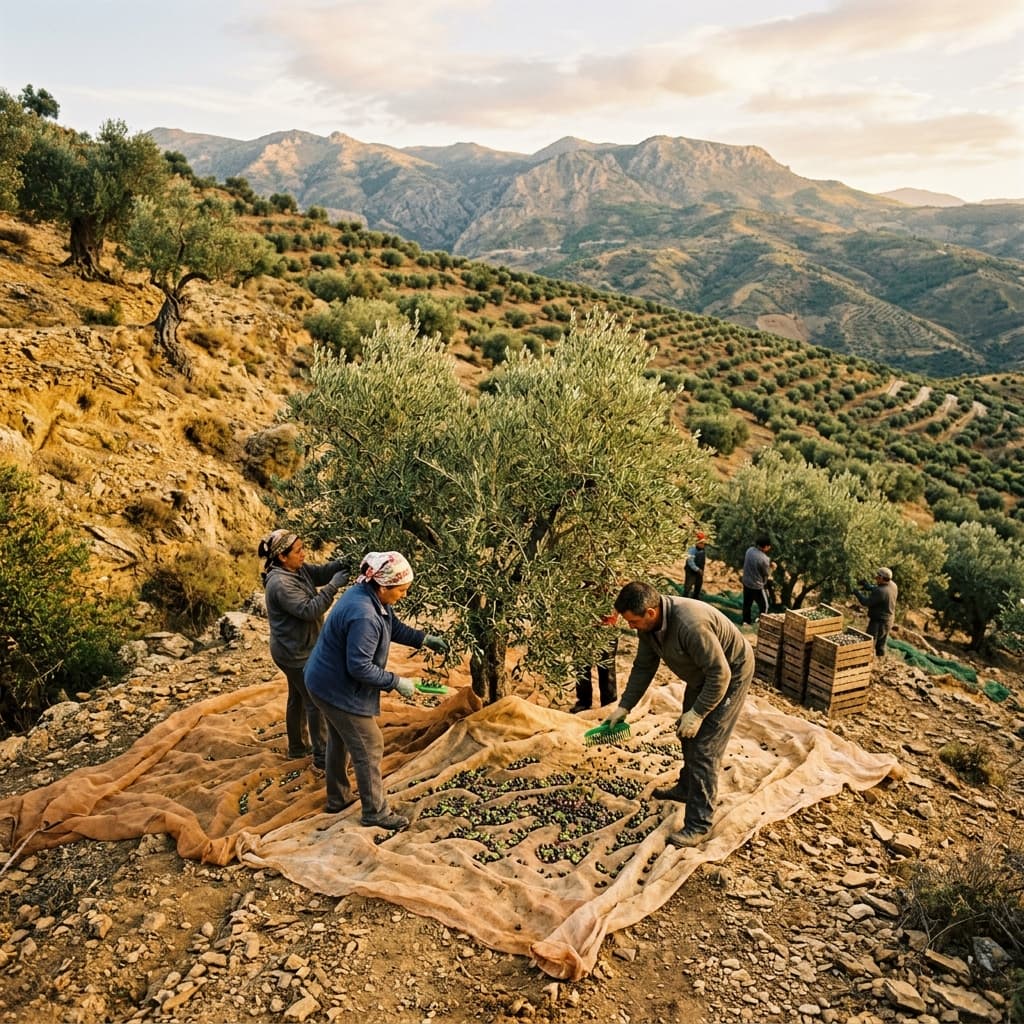
Most olive oil is made from fruit picked late or collected from the ground. We pick early, when the chemistry is at its best.
The standard industry approach is to wait until olives are fully ripe — even overripe — because ripe fruit yields more oil per kilogram. This makes economic sense for commodity producers. But it produces oil that is milder, has fewer protective antioxidants, and lacks the flavour complexity that defines premium oil.
Early harvest means picking when the olives are still partially green, in October and early November. The yield is lower. The cost per litre is higher. But the oil is fundamentally different in every measure that matters.
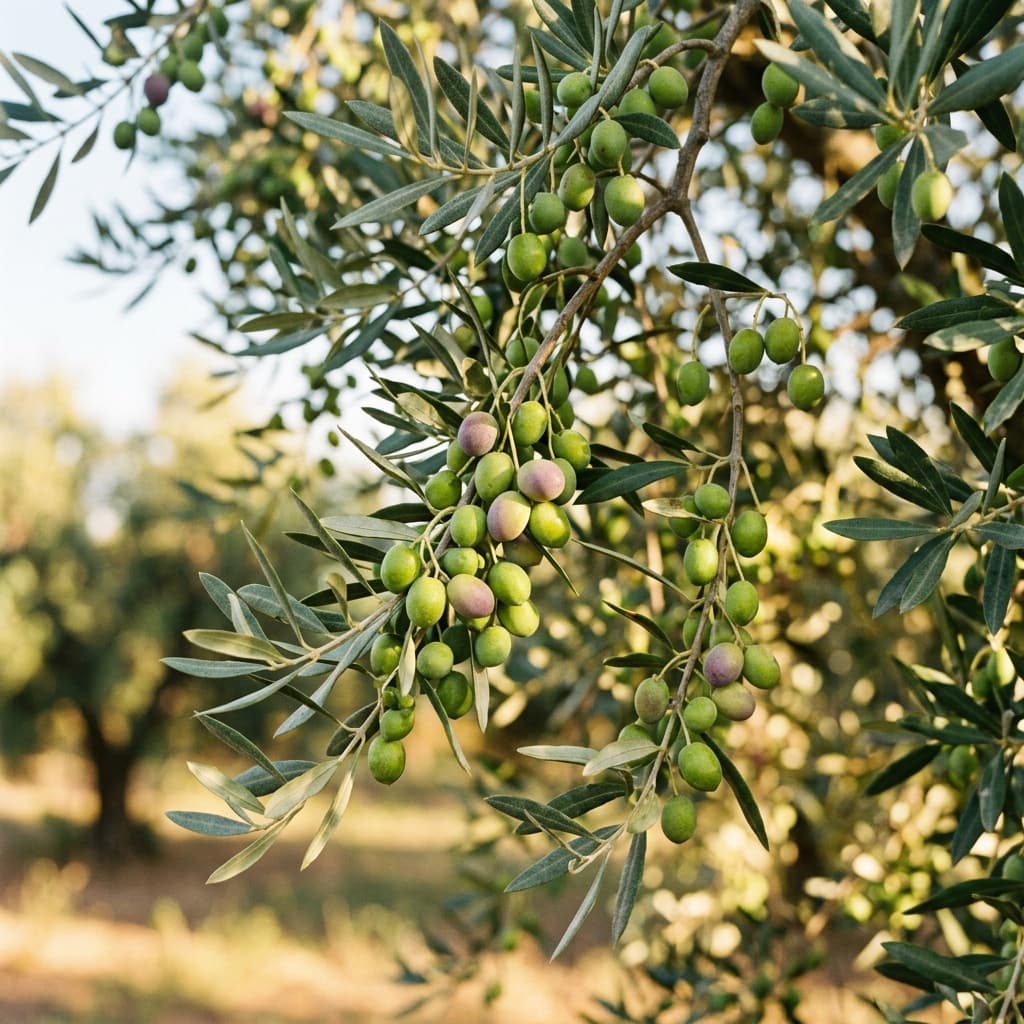
The harvest window is measured in weeks, not months
As an olive ripens, its polyphenol content drops, its free fatty acid levels rise, and its volatile aromatic compounds diminish. The difference between oil from an October olive and a January olive is not subtle — it is measurable and dramatic.
We monitor the fruit closely from late September. Picking begins when the olives have just started to turn — the stage known as envero. This is the point of maximum polyphenol concentration and aromatic intensity.
The entire harvest is usually complete within three to four weeks. After that, the fruit has moved past the optimal window.
Milled within hours, not days
Once picked, an olive begins to degrade. Enzymes break down the cell walls, fermentation starts, and the quality of the future oil drops with every hour that passes.
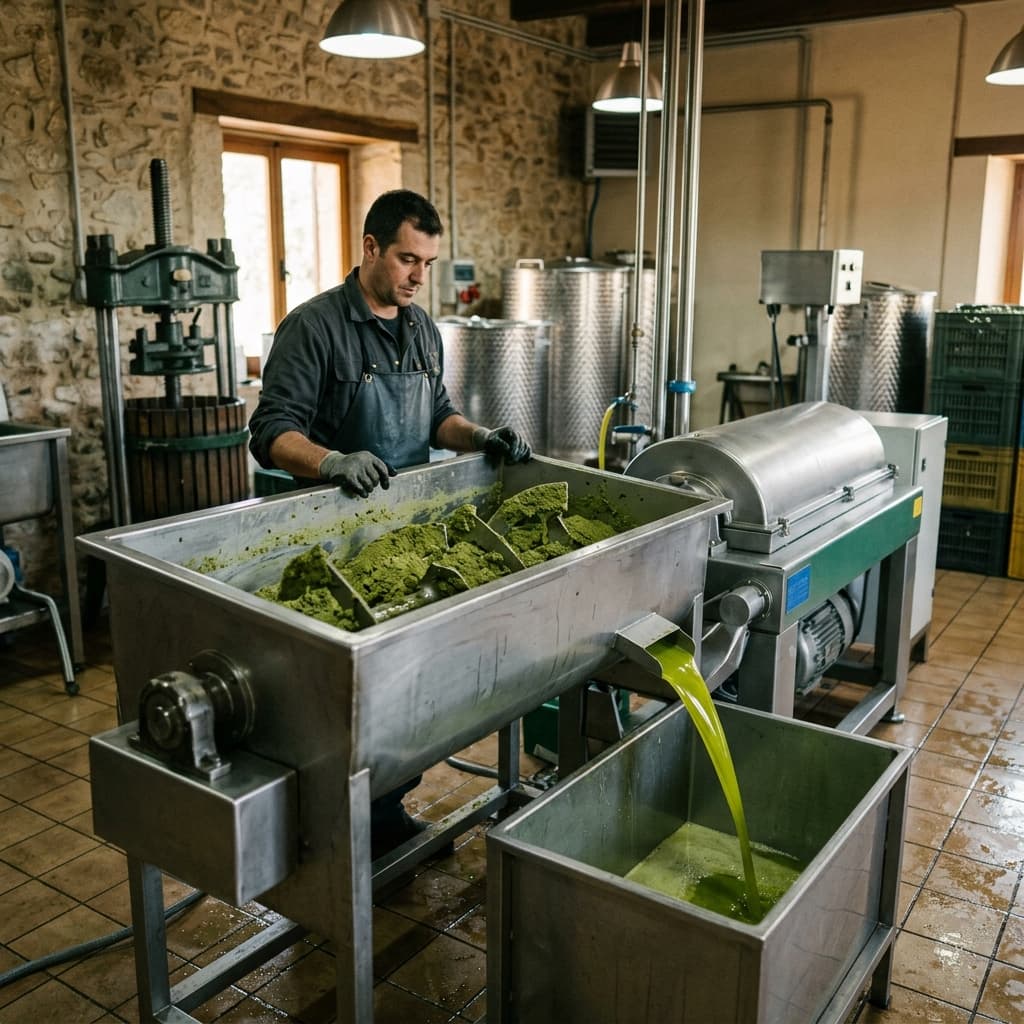
Our olives are milled the same morning they are picked. The pressing uses a modern two-phase centrifugal system at temperatures below 27°C — the legal threshold for cold extraction. This preserves the volatile compounds responsible for the fresh, green, grassy character of premium oil.
Industrial oils often sit in storage for days or weeks before pressing. The difference in resulting quality is not a matter of opinion — it is measurable through acidity, peroxide values, and sensory analysis.
Early harvest vs. standard harvest
| Factor | Early Harvest | Standard / Late Harvest |
|---|---|---|
| Picking time | October – early November | December – February |
| Olive colour | Green to turning | Black, fully ripe |
| Oil yield | Lower (12–16%) | Higher (18–24%) |
| Polyphenols | High (300–600 mg/kg) | Low (80–150 mg/kg) |
| Flavour | Green, fruity, peppery, complex | Mild, flat, buttery |
| Shelf stability | Longer (18–24 months) | Shorter (12–15 months) |
| Acidity | < 0.2% | 0.3 – 0.8% |
The cost of doing it properly is the reason most producers don't
Early harvest oil costs more to produce — lower yields, tighter timing, more labour. But the result is an oil that is genuinely different in flavour, nutrition, and shelf life. That is the trade-off we choose to make.
Try the HarvestA seasonal product
CompetaOlive is produced once a year, during a narrow harvest window. When the current vintage is sold, it is gone until the next harvest. This is not artificial scarcity — it is the nature of producing oil this way. We do not blend across harvests or top up with oil from other sources.