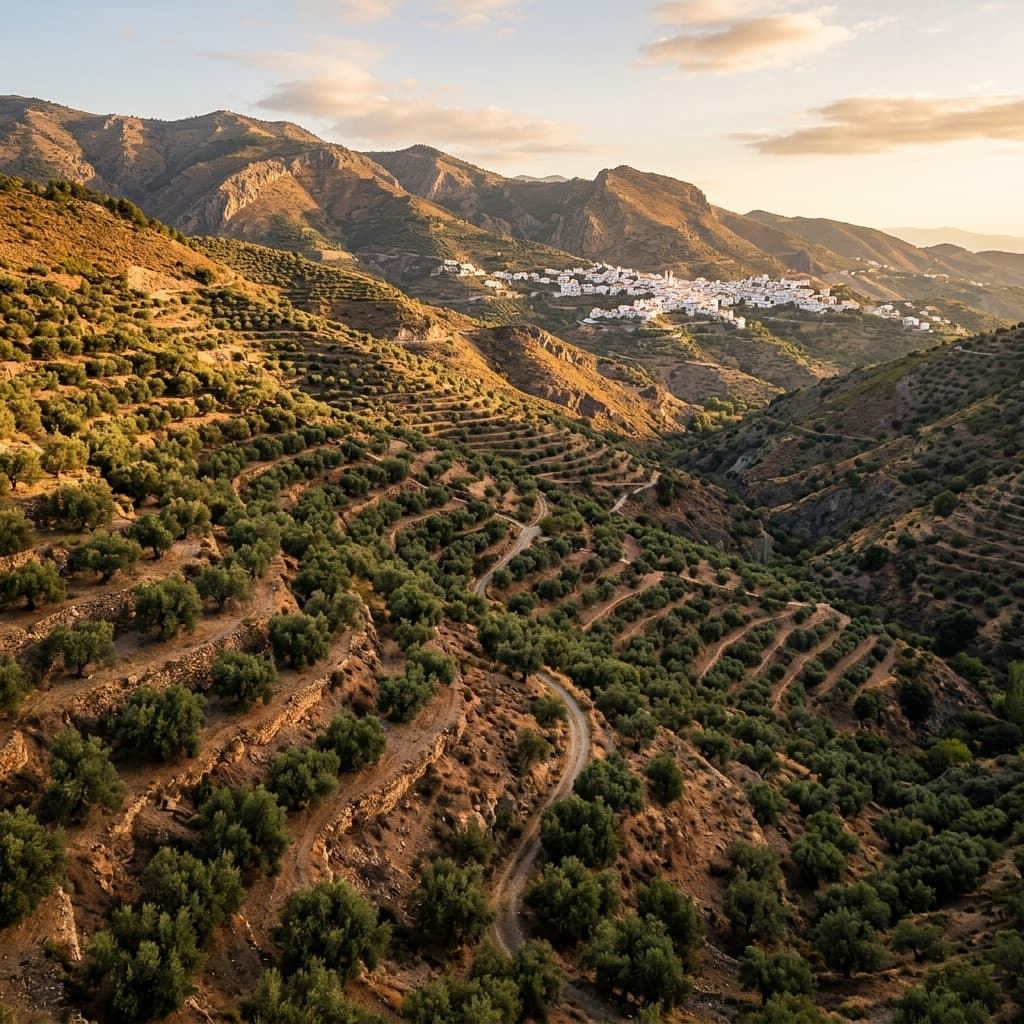
CompetaOlive is a single-origin olive oil produced in the mountain village of Cómpeta, on the eastern edge of Málaga province.
The Axarquía is one of the most distinctive sub-regions of Andalucía. Unlike the vast olive plains of Jaén and Córdoba, this area is defined by steep terrain, mixed agriculture, and a microclimate shaped by proximity to both the Mediterranean coast and the Sierra de Almijara.
Olive cultivation here has always been secondary to the region's reputation for tropical fruit, wine grapes, and almonds. But it is exactly this marginal status that has preserved something valuable: old-growth olive groves that have never been modernised, replanted, or re-engineered for industrial output.
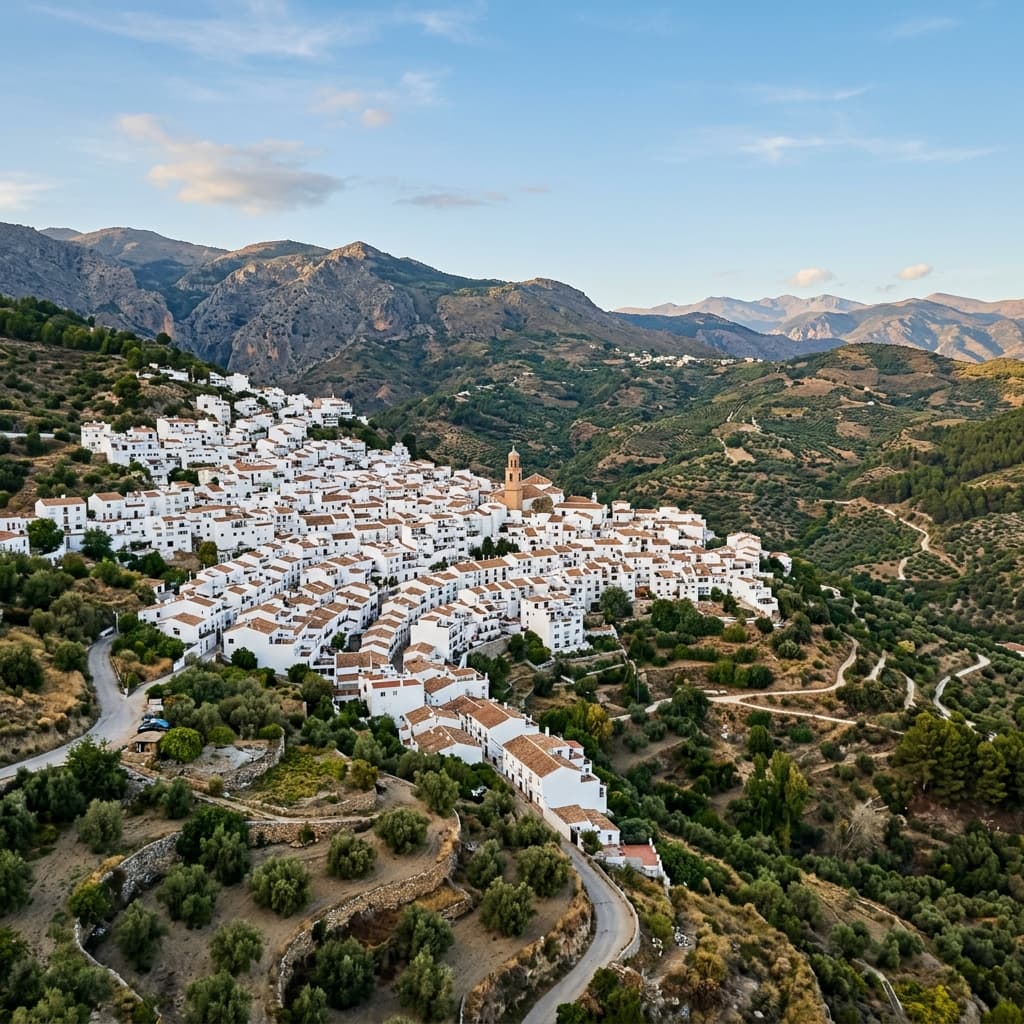
Cómpeta sits at 640 metres in a valley facing the sea
The village is one of a string of white hill towns — pueblos blancos — that dot the Axarquía mountains. The streets are narrow and steep. The agriculture is terraced. The pace of life tracks with the seasons.
Below the village, the slopes are planted with subtropical fruit. Above it, the land belongs to olives and almonds. At the highest points, the trees grow among rock and scrub with minimal intervention — no irrigation, no chemical inputs, no mechanised harvest.
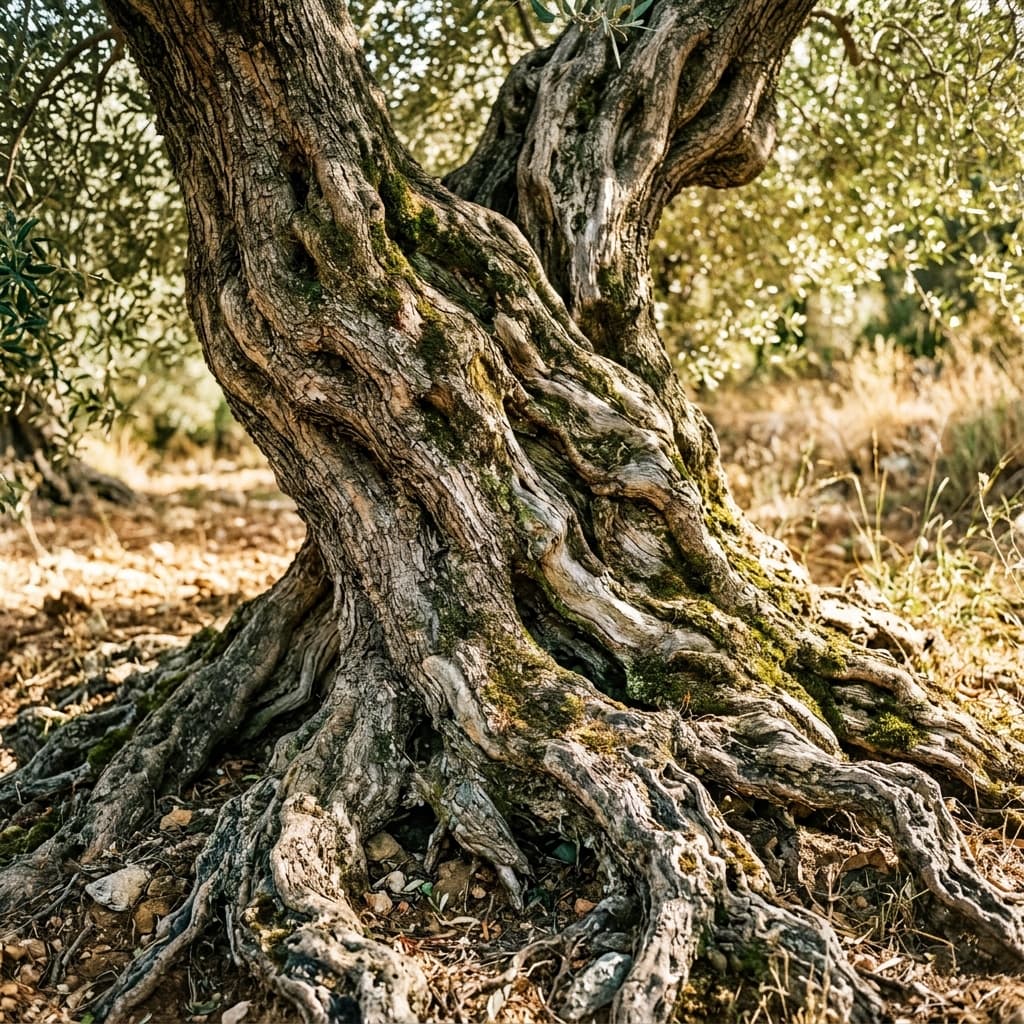
Verdial and Hojiblanca olives, grown on stone terraces
The primary varieties in these groves are Verdial de Vélez-Málaga — a local cultivar known for its aromatic complexity — and Hojiblanca, which contributes body and a clean bitter-peppery character.
Many trees are old growth, with trunks that bear the evidence of centuries. They produce modest yields of concentrated, flavourful fruit. The trees are not managed for maximum production — they are managed for quality of oil.
A low-yield tree on a rocky slope produces fruit with more character than a high-yield tree on an irrigated plain. The stress is part of the flavour.
Early harvest is not a marketing label. It is a decision about flavour, chemistry, and timing.
We pick our olives in October and early November, when the fruit is still green and the oil yield is lower. This costs more per litre, but produces oil with dramatically higher polyphenol content, brighter flavour, and a shelf life that genuinely outperforms late-harvest oils.
The harvest year
Grove maintenance, pruning, soil care. The trees flower in May. Fruit sets through the summer heat.
Early harvest begins. Olives are picked green, by hand and net, on the steepest terraces. Fruit is transported to the mill the same morning.
Main harvest window. All fruit is milled within four hours of picking. Cold extraction at below 27°C. Oil is settled and filtered gently.
New season oil is tasted, assessed, and prepared for bottling. Each batch is numbered and traceable.
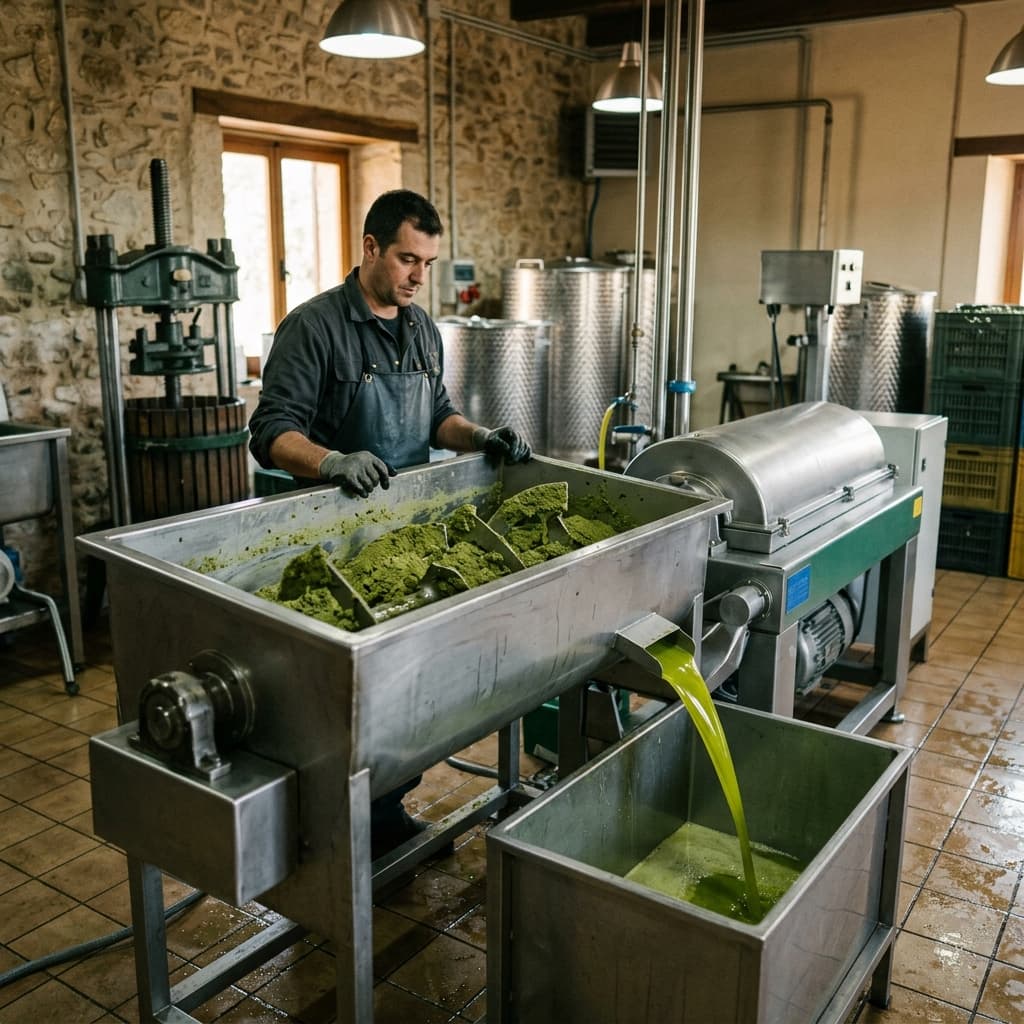
From tree to oil in under four hours
Speed matters. Once an olive is picked, oxidation begins. The longer the gap between tree and press, the higher the acidity and the more flavour compounds are lost.
Our olives are milled the same morning they are picked, using a modern two-phase extraction system at temperatures that never exceed 27°C. The result is oil with acidity consistently below 0.2% — well within extra virgin grade, and significantly below the 0.8% regulatory threshold.